
The Origin Story Nobody Planned
Shelter was not born from a grand vision document or a strategic planning retreat. It emerged from a simple, recurring problem that kept showing up in different forms across every project we built at Xcapit: how do you move value from point A to point B — reliably, transparently, and at a cost that does not eat the value being transferred?
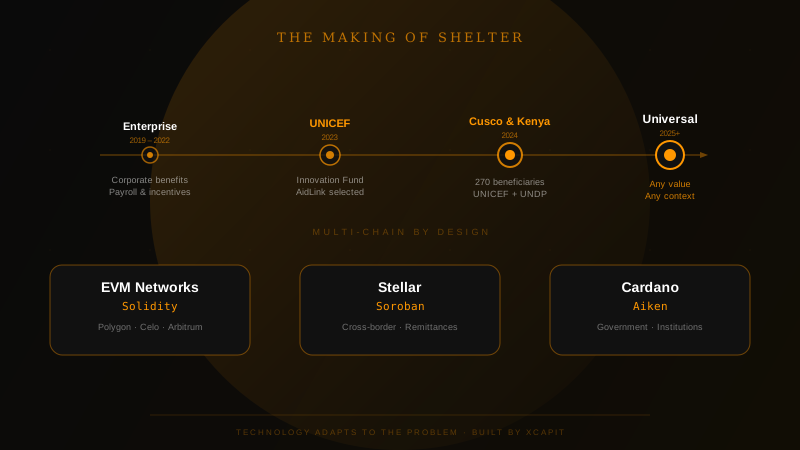
We first encountered this problem building corporate benefits platforms. Companies wanted to distribute incentives, bonuses, and subsidized services to employees. The existing infrastructure — bank transfers, prepaid cards, manual reconciliation — was expensive, slow, and opaque. We built blockchain-based distribution systems that settled in seconds and provided complete audit trails. The technology worked. But more importantly, building it taught us what matters in value distribution: it is not the technology, it is the operational reliability. Does every unit of value reach its intended recipient? Can you prove it? Can you do it at scale without the cost growing linearly?
Then came remittances. Cross-border payments for migrant workers sending money home. Different problem, same fundamental challenge: value needs to move efficiently across borders, currencies, and regulatory regimes. Building remittance infrastructure taught us about the last mile — the gap between moving money digitally and getting it into the hands of people who may not have bank accounts, smartphones, or reliable internet. This lesson would prove critical later.
The UNICEF Bet
In 2023, UNICEF's Innovation Fund selected us to build the disbursement engine for AidLink — a consortium connecting beneficiary registration (Rumsan), blockchain-based disbursement (Shelter), and mobile money conversion (Kotani Pay). When we accepted, we understood it would be the hardest thing we had built.
Humanitarian cash transfer is value distribution under the worst possible conditions. Beneficiaries in remote areas with intermittent connectivity. Populations with limited digital literacy and no bank accounts. Regulatory environments that vary dramatically between deployment countries. Zero tolerance for fund leakage — when the money is humanitarian aid, every missing dollar is a moral failure, not just a reconciliation error.
We took the bet deliberately. Our thesis was simple: if you can build infrastructure that works in the hardest environments, you can make it work anywhere. The constraints of humanitarian deployment would not weaken our technology — they would forge it.
Cusco: Where Theory Met Reality
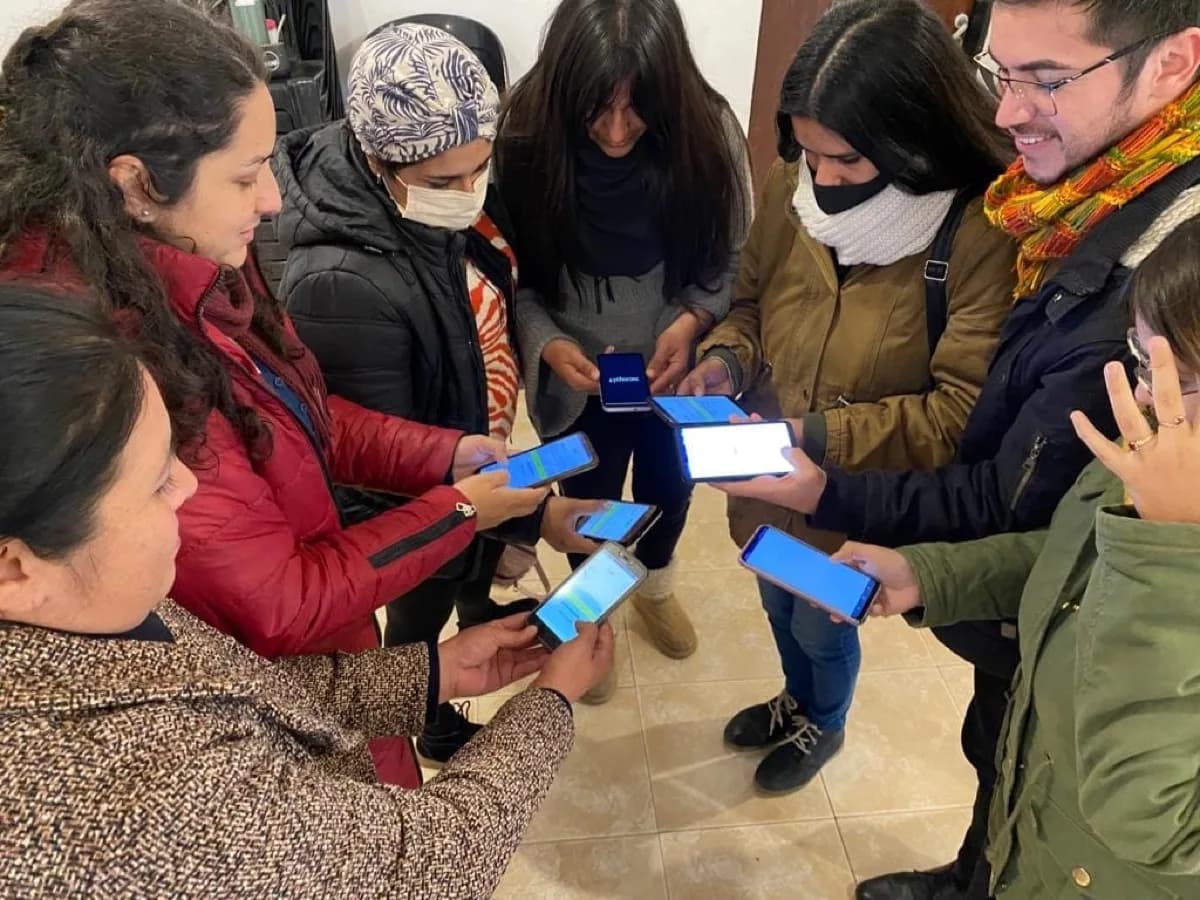
The Cusco pilot in August 2024 was our initial validation — a deliberate test of Shelter in a low-connectivity environment. 10 beneficiaries. No internet. No smartphones. Just basic handsets and SMS. If Shelter could handle this, it could handle anything.
It handled it. The entire pilot ran 100% offline, with beneficiaries transacting via SMS on basic handsets. On-chain traceability: 100% — every transaction tracked from source to recipient. The off-ramp ran through a local merchant network: beneficiaries received an SMS, went to a merchant, bought what they needed. No internet, no smartphone, no blockchain expertise required. The technology became invisible to the people it served.
Kenya: Different Context, Same Infrastructure
After Cusco, we expanded to Kenya with the support of UNICEF Venture Fund. Different country, different culture, different regulatory environment, different mobile money ecosystem — but the same Shelter infrastructure. This was the real test of our architecture: could a system designed in Argentina, proven in Peru, deploy in East Africa without fundamental redesign?
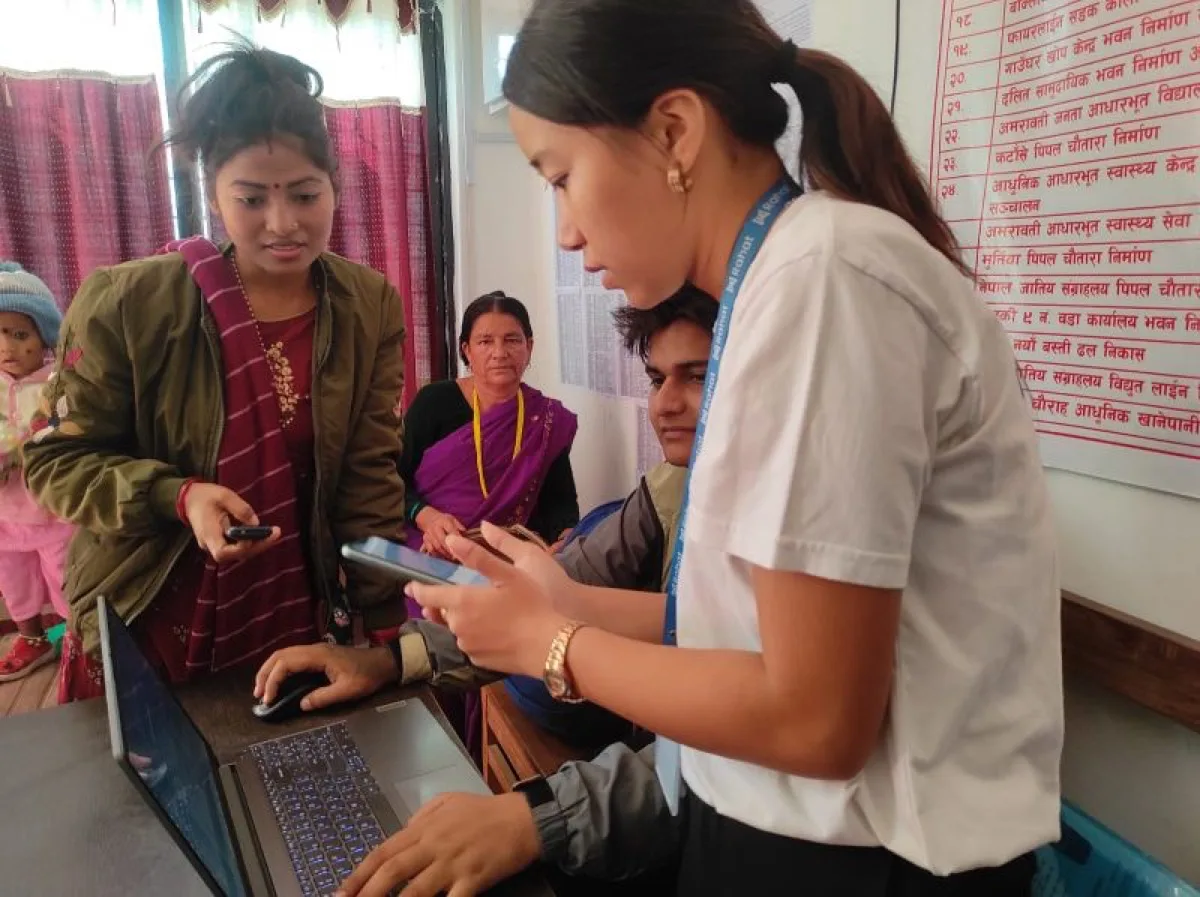
The answer was yes — and now we have the data to prove it. In December 2025, 49 beneficiaries with varying levels of intellectual disability in the Greater Nairobi Metropolitan Region received 65 USDC each through Xcapit's SMS wallet and successfully converted them to Kenyan shillings via M-Pesa. Completion rate: 100%. 79.6% of transactions completed seamlessly in an average of 19 minutes, with the fastest taking just 1 minute. Results were officially published by UNICEF Venture Fund in March 2026.
The reason for the success comes down to a design decision we made early: Shelter is chain-agnostic and context-agnostic. The smart contract layer, the dashboard, the API, the reporting — they abstract away the specifics of which blockchain, which mobile money provider, which regulatory framework. You configure Shelter for your deployment context; you do not rebuild it.
Kenya also deepened our understanding of the last mile. Mobile money penetration in Kenya (M-Pesa) is among the highest in the world, but the integration patterns are completely different from Latin American markets. And the SMS wallet we developed — enabling stablecoin transfers from a feature phone without internet — proved to be the key to inclusivity: if it works for people with the highest access barriers, it works for everyone.
Why We Build on Multiple Chains
One of the most common questions we get is: why not just pick one blockchain? The answer is that different problems demand different tools, and locking yourself into a single chain is the technological equivalent of saying every nail looks the same to your hammer.
Shelter currently deploys on three blockchain ecosystems, each chosen for specific strengths:
- EVM-compatible networks (Polygon, Celo, Arbitrum) using Solidity — our most battle-tested stack. Low transaction costs, massive developer ecosystem, and the widest range of stablecoin support. This is where most humanitarian and corporate deployments run today.
- Stellar using Soroban — purpose-built for cross-border payments and financial inclusion. Stellar's native stablecoin infrastructure and its network of anchors (on/off-ramp partners) make it ideal for remittance corridors and cross-border aid distribution.
- Cardano using Aiken — the newest addition to our multi-chain capability. Cardano's emphasis on formal verification and academic rigor makes it attractive for government programs and institutional deployments where auditability and mathematical proof of correctness are requirements, not nice-to-haves.
The principle is straightforward: the technology adapts to the problem, not the other way around. When a government ministry in a Cardano-aligned country wants to run a social transfer program, we do not ask them to learn about Polygon. When a humanitarian organization already using Celo needs disbursement infrastructure, we do not evangelize Stellar. We meet deployers where they are and build on the chain that makes their specific use case work best.
From Humanitarian Aid to Universal Value Distribution
Here is what building for UNICEF and UNDP taught us that we could not have learned any other way: the hardest problems in value distribution are not technical. They are operational. Can the system work when the internet drops out? Can a non-technical program manager run a disbursement cycle? Can you onboard a beneficiary who has never used a smartphone? Can you provide an audit trail that satisfies both a UN donor and a national government regulator?
Solving those problems in the humanitarian context made Shelter fundamentally better for every other context. A corporate benefits platform that works in Cusco is trivially easy to run in Buenos Aires. A government social transfer program is simpler than a multi-country humanitarian operation. Climate finance disbursement to community conservation projects is a subset of the complexity we already handle.
This is the insight that drives our roadmap: every form of value distribution — cash transfers, digital vouchers, corporate incentives, government subsidies, carbon credit proceeds, employee benefits — is fundamentally the same problem at different scales and in different regulatory contexts. Move value from source to recipient. Do it transparently. Do it efficiently. Prove it happened. Shelter now solves this across all these contexts because the humanitarian deployment forced us to solve the hardest version first.
If You Can Handle the Worst, You Can Handle Anything
I want to close with a reflection that goes beyond technology. When we started building distribution systems in 2019, we were solving a business problem. When UNICEF selected us in 2023, we were solving a humanitarian problem. Today, with deployments in Peru and Kenya and multi-chain infrastructure across EVM, Stellar, and Cardano, we are solving an infrastructure problem.
The progression was not planned, but looking back, it was inevitable. Each harder problem we solved expanded the range of easier problems our infrastructure could handle. Enterprise distribution taught us auditability. Remittances taught us cross-border complexity. UNICEF taught us operational resilience in extreme conditions. UNDP in Kenya taught us multi-geography portability.
Shelter today is the sum of all those lessons. It is not a humanitarian tool that happens to work for enterprise. It is not an enterprise tool adapted for humanitarian use. It is universal value distribution infrastructure — proven in the hardest conditions, deployable anywhere, adaptable to any blockchain, configurable for any use case. That is the product of building where failure is not an option and then bringing those standards everywhere else.
Shelter is open-source, recognized as a Digital Public Good, and available as managed SaaS. If you are distributing value at any scale — from 59 beneficiaries in Cusco and Nairobi to millions of recipients in a national social program — we would welcome the opportunity to show you what infrastructure built in the hardest conditions can do for your context. Visit xcapit.com/labs/shelter to learn more, or reach out through our contact page.

Fernando Boiero
CTO & Co-Founder
Over 20 years in the tech industry. Founder and director of Blockchain Lab, university professor, and certified PMP. Expert and thought leader in cybersecurity, blockchain, and artificial intelligence.
Building on blockchain?
Tokenization, smart contracts, DeFi — we've shipped it all.
You Might Also Like
Shelter: the infrastructure that delivers aid where the system gives up
Blockchain, SMS and stablecoins serving those who need them most. No banks. No middlemen. No friction. Shelter is Xcapit's humanitarian aid disbursement platform — 167 countries reached, 70K+ people impacted, 3 pilots completed, 2 weeks of technical integration.
Caracas, Fe y Alegría and blockchain: direct aid to 30 educators with no middlemen, no friction
Under the UNICEF Venture Fund, Xcapit and Fe y Alegría delivered $3,000 USDT to 30 teachers in Caracas via SMS wallet and FORUM supermarkets. 100% operational success rate, 5/5 satisfaction, and 94% spent on food. The story of a pilot that proved technology can become invisible — and leave only dignity behind.
AidLink Kenya Pilot: 100% of Stablecoin Transfers Reached Beneficiaries
UNICEF Venture Fund published the results of AidLink's stablecoin cash transfer pilot in Nairobi: 49 beneficiaries received USDC via SMS wallet and off-ramped to M-Pesa with a 100% completion rate. Field lessons that strengthen our infrastructure.