
On March 10, 2026, UNICEF Venture Fund published the official results of the AidLink pilot in Nairobi, Kenya — the first end-to-end test of the stablecoin-based cash transfer platform outside Latin America. For Xcapit, this pilot represents a milestone: independent validation that our infrastructure works on a new continent, with a different population, under real field conditions.
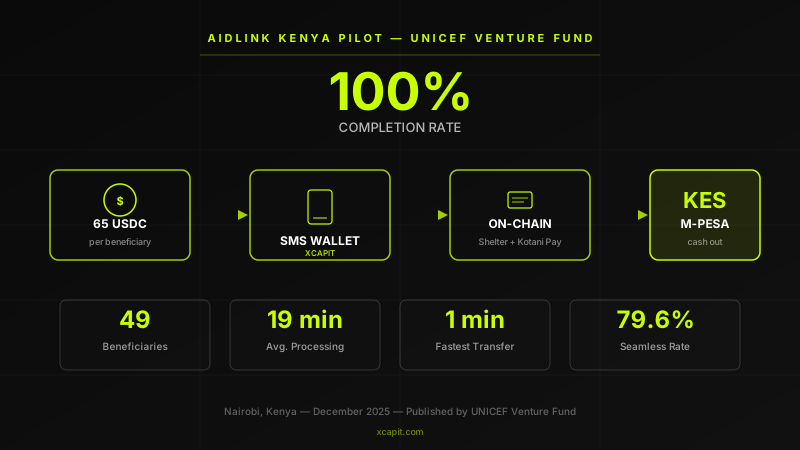
The most important data point: 100% of funds reached their destination. All 49 beneficiaries received their 65 USDC and successfully converted them to Kenyan shillings via M-Pesa. In humanitarian cash transfers, where every dollar that doesn't arrive is a failure, a 100% completion rate isn't just a metric — it's a promise kept.
The Pilot: Nairobi, December 2025
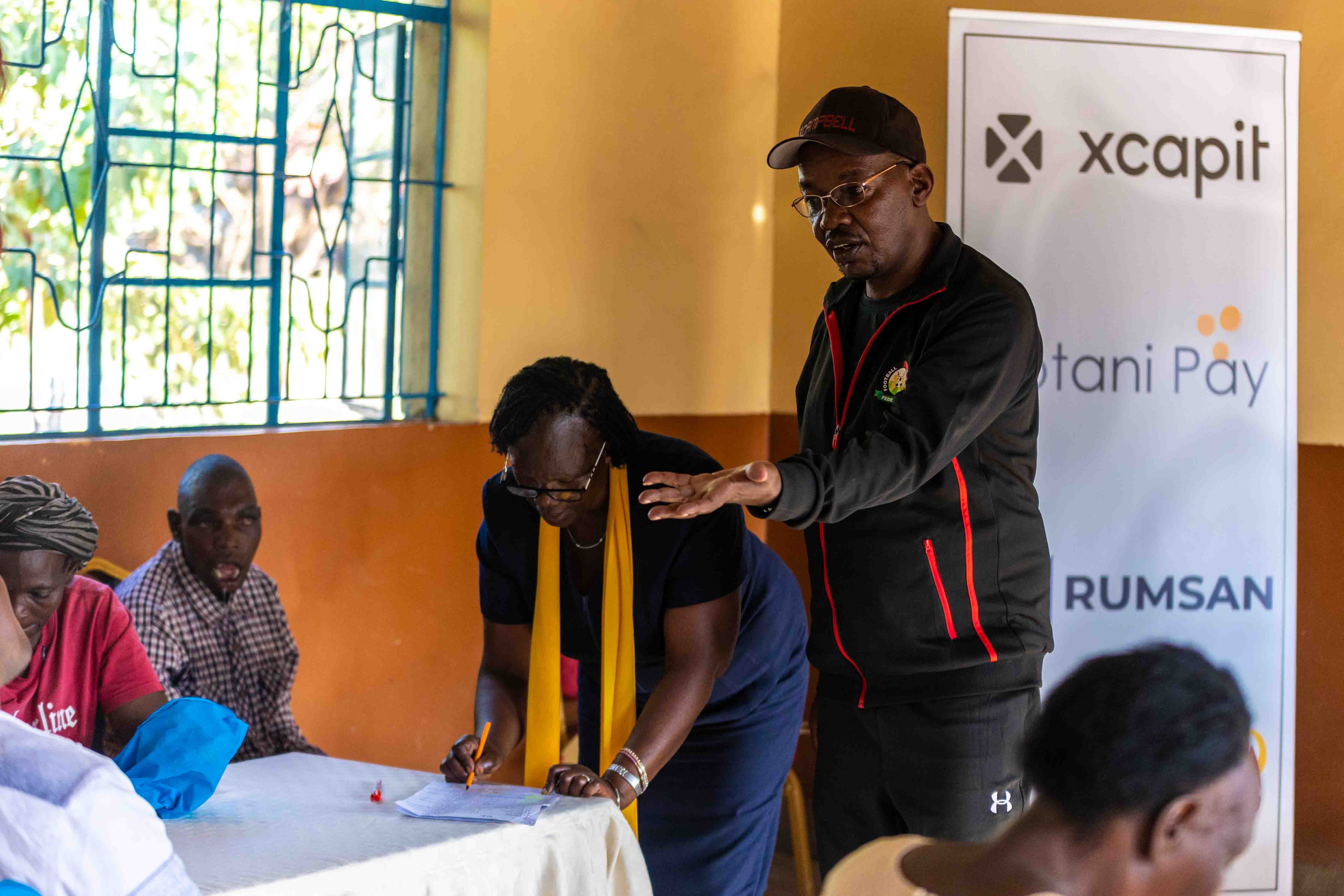
The pilot was conducted in December 2025 in the Greater Nairobi Metropolitan Region, Kenya. Local NGO Advantage Africa identified and facilitated the participation of 49 beneficiaries with varying levels of intellectual disability — a deliberately diverse test group that included individuals who could operate phones independently, individuals requiring family or carer assistance, and individuals requiring full phone operation support by a third party.
This choice of beneficiaries was deliberate. If the infrastructure works for people with the highest access barriers, it works for everyone. It's the same principle that guided the Cusco pilot: build for the hardest case first.
The pipeline was the same AidLink architecture, with all three partners fulfilling their roles: Rumsan managed beneficiary data and triggered disbursements, Xcapit provided the SMS wallet and treasury management via Shelter, and Kotani Pay executed the USDC-to-KES conversion and M-Pesa off-ramp.
SMS Wallets: Stablecoins Without a Smartphone
The most critical component of the pilot was Xcapit's SMS wallet. In many regions of Africa and the Global South, smartphones are not the norm — feature phones (basic phones with keypads) remain the primary device. AidLink cannot depend on beneficiaries downloading an app or having a stable internet connection.
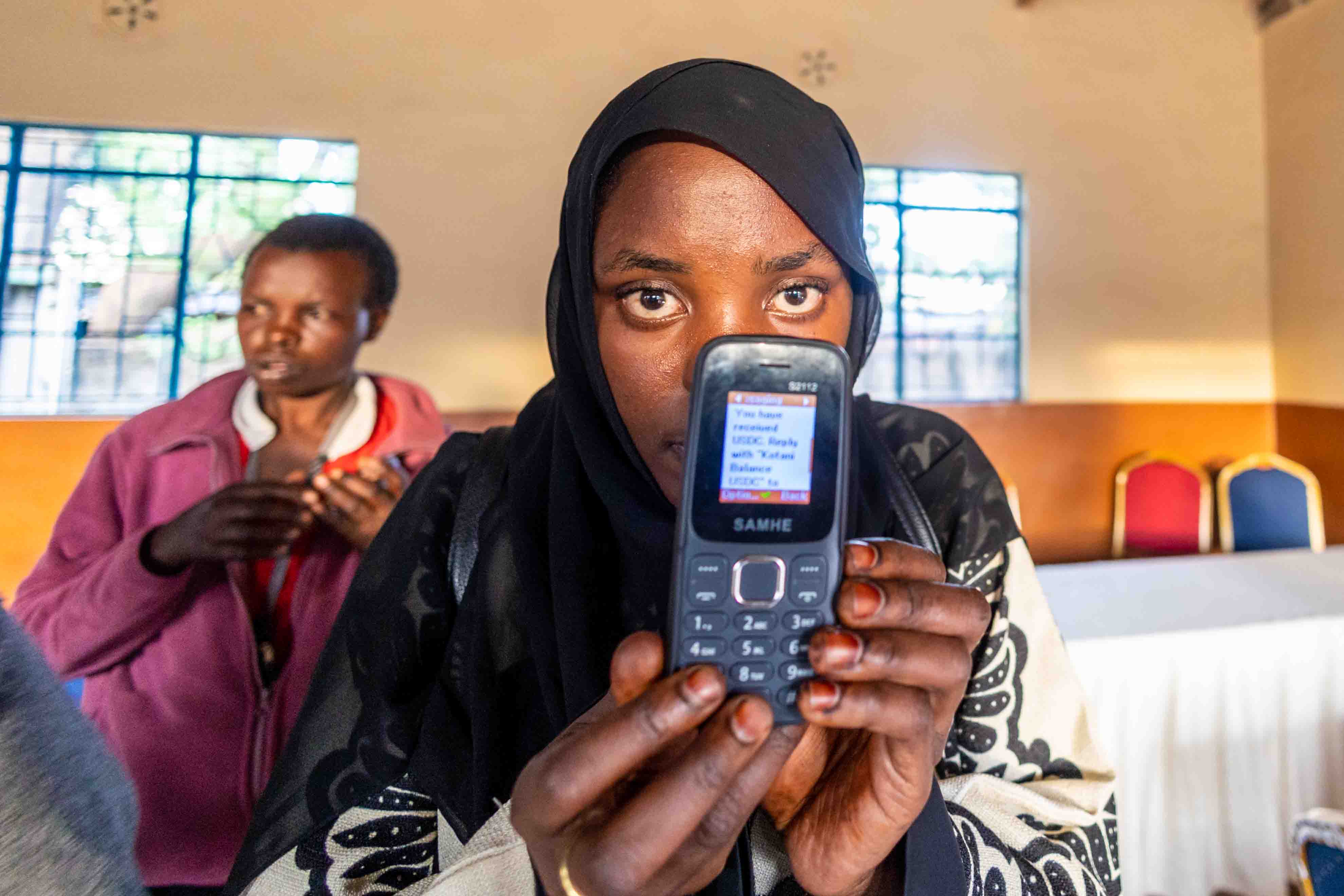
The SMS wallet works through text commands. The beneficiary receives an SMS notifying them that funds are available. To convert them to M-Pesa, they send an SMS command with their M-Pesa phone number. Shelter executes the on-chain conversion, Kotani Pay completes the off-ramp, and the beneficiary receives shillings directly in their M-Pesa account. All without apps, without internet, without blockchain knowledge.
Results: 100% Completion Rate
The pilot results, published by UNICEF Venture Fund, speak for themselves:
- 49 beneficiaries received 65 USDC each — disbursement rate: 100%
- 100% of funds were successfully off-ramped to M-Pesa in Kenyan shillings
- 39 of 49 transactions (79.6%) completed seamlessly — average: 19 minutes
- Fastest transaction: 1 minute from USDC receipt to M-Pesa cash-out
- 9 transactions (18.4%) had extended processing — between 40 minutes and 2+ hours
- 1 transaction took 2 days because the beneficiary had no electricity at home
- Public dashboard on Dune Analytics for independent verification of all on-chain transactions
The 100% completion rate is the headline, but there are important nuances. The 9 transactions with extended processing were caused by temporary RPC outages (blockchain communication) and a temporary shortage of KES liquidity in the off-ramp bank account. These are not system failures — they are real operational conditions that inform the design of the next deployments.
What We Learned: Honest Lessons from the Field
One of Xcapit's principles is that pilots don't just serve to prove something works — they serve to find what doesn't work. The Kenya pilot delivered exactly that: a clear list of improvements that strengthen the platform for the next deployment.
- The SMS interface needs simplification: commands were unintuitive for some users and case sensitivity caused avoidable errors. The solution: add a USSD interface with multiple-choice options as an alternative.
- Operational procedures need stronger documentation: there were three instances of mistyped phone numbers due to human error and some beneficiaries arrived with SIM cards only, without phones.
- Off-ramp liquidity must be pre-ensured: there was a temporary shortage of Kenyan shillings in Kotani Pay's bank account, which delayed some conversions.
- Data load estimation needs improvement: RPC outages were caused by underestimating the load on blockchain nodes.
- Local context matters: technology must adapt to real field conditions, not the other way around.
As José Trajtenberg, CEO of Xcapit, noted: "Operating in real humanitarian settings highlighted challenges related to infrastructure, connectivity, and coordination. These experiences reinforced that technology must remain simple, flexible, and context-aware, underscoring the importance of modular design and iterative testing."
Transparent by Default: Public Dashboard
A fundamental aspect of the pilot is transparency. All transactions — both initial disbursements and off-ramp initiations — are recorded on-chain and verifiable through a public Dune Analytics dashboard. Anyone can independently audit the flow of funds.
At the same time, personally identifiable information (names, phone numbers) is never stored on-chain. Test wallets were closed after successful off-ramping to prevent misuse. It's the right balance: full transparency over funds, full privacy over people.
From Cusco to Nairobi: Infrastructure That Gets Stronger
The Kenya pilot is AidLink's second milestone after the Cusco pilot with 270 beneficiaries. But rather than a repetition, it's an evolution. Cusco validated that the pipeline works. Kenya validated that it works in a completely different context — different continent, different currency (KES), different mobile money system (M-Pesa), different culture, and beneficiaries with specific accessibility needs.
Each pilot strengthens the platform. Cusco's challenges informed the Kenya pilot's design. Kenya's challenges will inform the next deployment. This is the essence of iterative development under real conditions — not lab demos, but infrastructure tested with the people who need it.
If your organization works in humanitarian cash transfers, government social programs, or any context requiring transparent, traceable value distribution, the Kenya pilot results demonstrate that the infrastructure is ready. Explore more about Shelter on our case study page or contact us directly.

José Trajtenberg
CEO & Co-Founder
Lawyer and international business entrepreneur with over 15 years of experience. Distinguished speaker and strategic leader driving technology companies to global impact.
Building on blockchain?
Tokenization, smart contracts, DeFi — we've shipped it all.
You Might Also Like
Shelter: the infrastructure that delivers aid where the system gives up
Blockchain, SMS and stablecoins serving those who need them most. No banks. No middlemen. No friction. Shelter is Xcapit's humanitarian aid disbursement platform — 167 countries reached, 70K+ people impacted, 3 pilots completed, 2 weeks of technical integration.
Caracas, Fe y Alegría and blockchain: direct aid to 30 educators with no middlemen, no friction
Under the UNICEF Venture Fund, Xcapit and Fe y Alegría delivered $3,000 USDT to 30 teachers in Caracas via SMS wallet and FORUM supermarkets. 100% operational success rate, 5/5 satisfaction, and 94% spent on food. The story of a pilot that proved technology can become invisible — and leave only dignity behind.
From Cusco to Kenya: How the Hardest Environments Built the Best Infrastructure
The story of Shelter — how years of building value distribution systems, field-tested with UNICEF and UNDP in the most complex conditions, created infrastructure that works anywhere. Multi-chain by design: EVM, Stellar, and Cardano.