
Choosing the right custom software development company can make or break your project. With thousands of agencies competing for your business, the decision goes far beyond comparing hourly rates. You need a partner who understands your domain, communicates transparently, and delivers production-quality code.
Why the Choice Matters More Than Ever
The cost of a failed software project isn't just the budget burned — it's the opportunity cost, the delayed time-to-market, and the technical debt that haunts your organization for years. A 2025 Standish Group report found that 66% of software projects experience cost overruns or fail to deliver expected value. The common thread? Misalignment between the client and the development partner.
In 2025, the landscape has shifted further. AI-assisted development, cloud-native architecture, and increasing cybersecurity regulations mean your development partner needs a broader skill set than ever before.
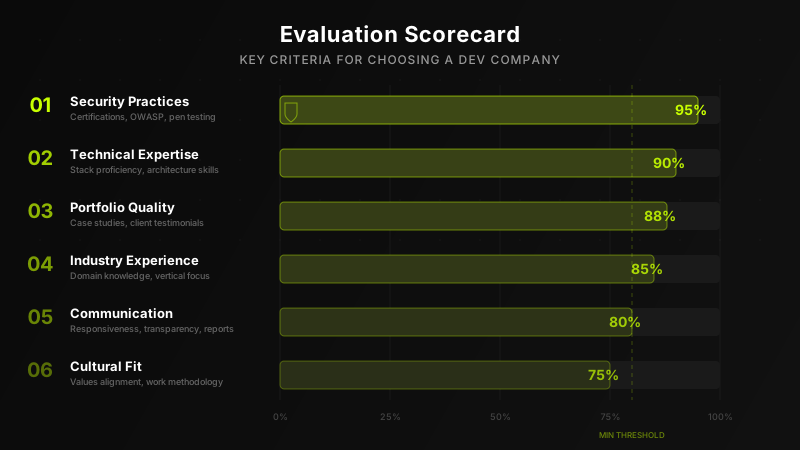
7 Key Criteria for Evaluating a Development Partner
1. Domain Expertise Over Generic Experience
A company that has built fintech platforms understands PCI-DSS compliance, transaction processing, and financial regulations. One that specializes in healthcare knows HIPAA. Don't just look at years in business — look at relevant project experience in your specific industry.
2. Technical Stack Alignment
Ensure the company's core technology stack aligns with your needs and long-term strategy. If you need a React/Node.js application, hiring a Java shop to 'learn on your project' is a red flag. Look for teams that contribute to open-source projects in your stack — it signals genuine expertise.
3. Security-First Mindset
Security can't be bolted on after development. Ask about their secure development lifecycle, whether they conduct code reviews and penetration testing, and if they hold relevant certifications like ISO 27001. Companies that treat security as an afterthought will cost you more in the long run.
4. Communication and Project Management
The best engineering team is useless if you can't communicate effectively. Look for teams that use agile methodology with regular sprints, demos, and retrospectives. Ask about their project management tools, time zone overlap, and escalation procedures.
5. Transparent Pricing Model
Fixed-price contracts sound safe but often lead to scope disputes. Time-and-materials with sprint-based budgeting gives you flexibility while maintaining cost visibility. The key is understanding exactly what you're paying for and having the ability to adjust priorities each sprint.
6. Client References and Case Studies
Ask for references from clients in your industry and of similar project size. A company that has delivered a wallet for UNICEF reaching 4M+ users has proven they can handle scale. One that has only built MVPs may struggle with enterprise requirements.
7. Post-Launch Support
Software doesn't end at launch. Ask about maintenance packages, SLAs, monitoring, and how they handle production incidents. A company that offers ongoing support treats your product as a long-term commitment, not a one-off project.
Red Flags to Watch For
- No discovery phase — jumping straight to development without understanding your business
- Promising unrealistic timelines or budgets to win the contract
- No code ownership — locking you into their proprietary framework
- No security practices or certifications
- Inability to provide client references from similar projects
- Offshore-only teams with no timezone overlap
Questions to Ask During Evaluation
- Can you show me a project similar to mine in scope and industry?
- What is your approach to security and how do you handle vulnerabilities?
- How do you handle scope changes mid-project?
- What happens if key team members leave during the project?
- Can I speak with a current or recent client?
Making the Decision
The best custom software development company for your project is one that combines technical excellence with genuine understanding of your business goals. They should challenge your assumptions, propose better solutions, and treat your project as if it were their own product.
At Xcapit, we approach every engagement as partners, not vendors. Our background building our own products — including a digital wallet used by 4M+ people across 167+ countries with UNICEF — taught us that software is only as good as the value it delivers. If you're evaluating development partners, we'd love to have a conversation about your project.

José Trajtenberg
CEO & Co-Founder
Lawyer and international business entrepreneur with over 15 years of experience. Distinguished speaker and strategic leader driving technology companies to global impact.
Need custom software that scales?
From MVPs to enterprise platforms — built right.
You Might Also Like
Custom software or an existing solution? How to make the best decision for your company
Buy or build is one of the most important decisions in any digital transformation project. When each option makes sense, why the right question is not binary, and how to assess long-term impact.
Software Factory vs In-House Development: A Decision Framework for 2026
A balanced, data-driven guide for CTOs and engineering leaders comparing in-house development teams with software factory partnerships. Includes cost breakdowns, decision criteria, hybrid models, and a structured framework to make the right choice for your organization.
Outsourcing Software Development to Argentina: A 2026 Guide for US & European Companies
Everything you need to know about outsourcing software development to Argentina -- from timezone advantages and talent pool to legal frameworks, costs, and how to choose the right partner.