EPEC & Gobierno de Córdoba
Renewable Energy Tokenization for EPEC & the Government of Córdoba
How we designed and implemented a three-token system for distributed and community energy tokenization, integrating Renewable Energy Certificates (RECs) on blockchain with the Government of the Province of Córdoba, Argentina.
High-impact projects tokenized
Homes powered
Installed capacity
SDGs impacted
Can a citizen directly participate in a solar energy project, receive economic returns for energy injected into the grid, and obtain verifiable renewable energy certificates — all from their phone? That was the question that guided the development of our energy tokenization platform for EPEC and the Government of the Province of Córdoba, Argentina.
The Challenge
Distributed and community energy generation in Argentina is growing, but it faces significant barriers. Citizens lack clear mechanisms to participate as investors in renewable energy projects. Traceability of generated energy and its environmental impact is limited. And Renewable Energy Certificates (RECs) — a global standard present in over 50 countries — did not have a verifiable digital implementation in the country.
EPEC, together with the Ministry of Infrastructure and Public Services of the Province of Córdoba, sought a solution that would democratize access to renewable energy projects, provide full transparency on energy and value flows, and establish the foundations for a traceable renewable energy certificate market in Argentina.
Solution Architecture: Three-Token System
We designed an innovative three-token system on blockchain, where each token represents a different dimension of participation in a renewable energy generation project.
Participation Token (PUG)
The first token represents participation or ownership in each sustainable generation project. Each PUG (Participación en Unidad de Generación — Participation in Generation Unit) certifies the holder's stake in a specific project, providing economic rights proportional to their investment.
Utility Token (ERI)
The second token represents economic utility: the returns generated by renewable energy injected into the electrical grid. Each ERI (Energía Renovable Inyectada — Injected Renewable Energy) is issued based on the kWh effectively generated and injected, creating a direct relationship between energy production and value received by participants.
Sustainability Attributes Token
The third token captures the environmental attributes of the generated energy. When a participant accumulates 1,000 sustainability tokens, they can burn them to issue a Renewable Energy Certificate (REC) certifying 1 MWh of renewable energy generated. This mechanism bridges distributed generation and the global environmental certificate market.
Renewable Energy Certificates (RECs)
RECs are an international standard certifying that a specific amount of energy was generated from renewable sources. Used in over 50 countries, with standards like Guarantees of Origin in the EU and I-REC globally, RECs allow companies and organizations to verify their clean energy consumption.
Our implementation makes each issued REC fully traceable on blockchain: from the kWh generated at the solar park to the certificate issuance, every step is recorded immutably. This solves one of the historical challenges of the certificate market: verifiability and prevention of double counting.
Integration with Ciudadano Digital
The platform integrates with Ciudadano Digital, the Government of Córdoba's digital identity system. This allows participants to access their wallet and manage their tokens using their verified government digital identity, eliminating the need to create additional accounts and ensuring the identity of every participant in the ecosystem.
Impact: Mundo Maipú Solar Park
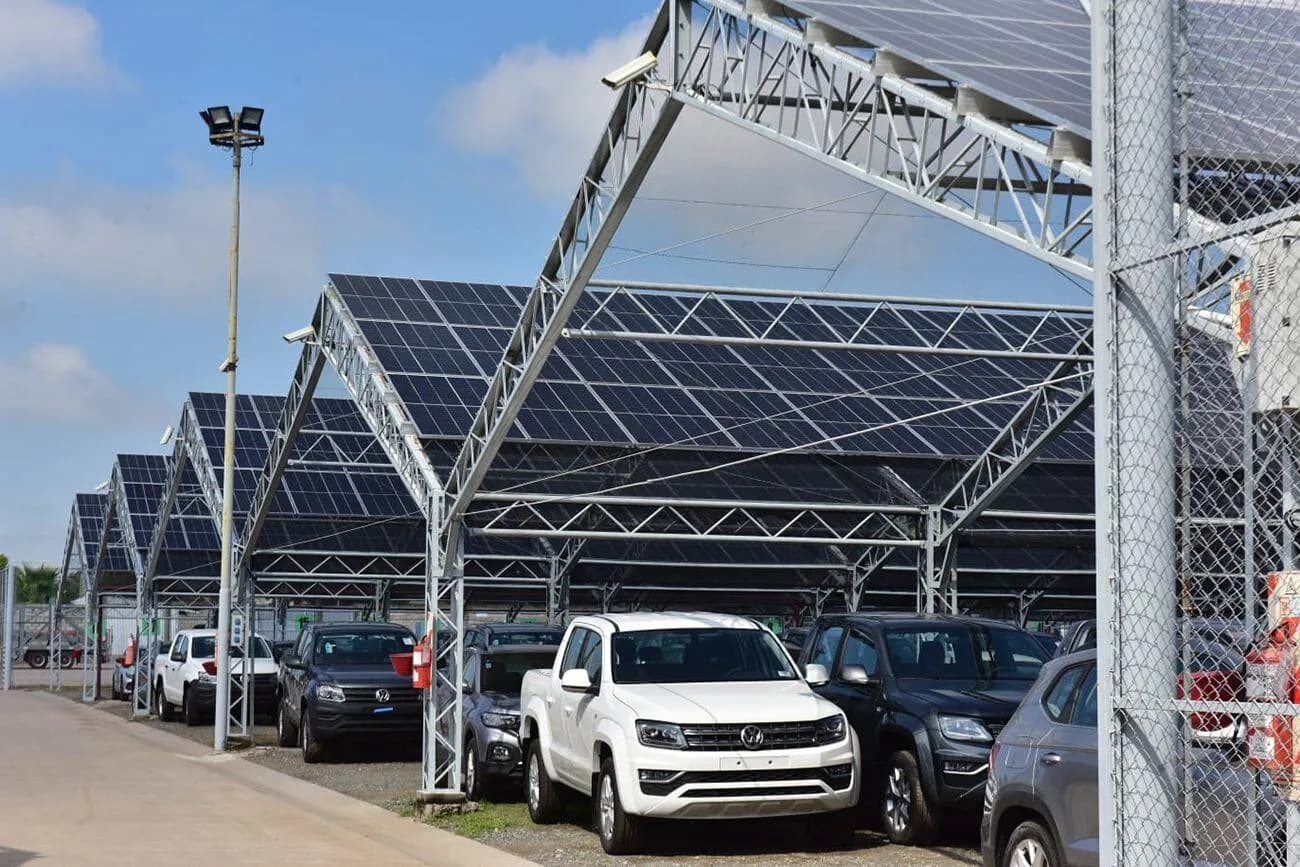
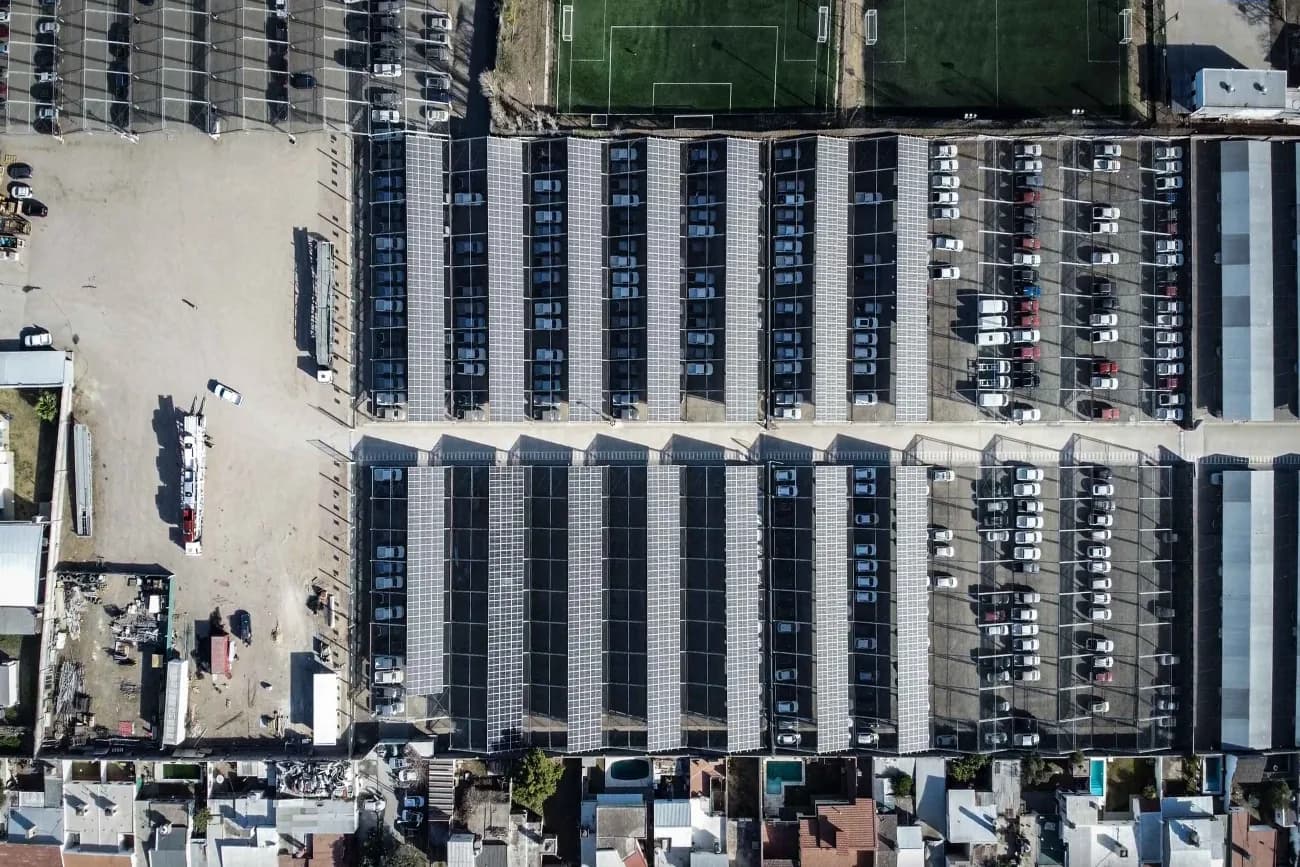
The first project to implement the system was the Mundo Maipú solar park, a municipality in Greater Córdoba. With 1,656 solar panels and an installed capacity of 828 kWp, the park generates energy equivalent to the consumption of over 450 homes. It was the first community solar park in Argentina to tokenize its energy generation. In January 2025, the project was covered by La Voz, Córdoba's leading newspaper, under the headline "The Mundo Maipú solar park will begin to tokenize its energy."
Results & Metrics
The Mundo Maipú deployment produced measurable results across multiple dimensions:
- 828 kWp installed capacity — the largest tokenized community solar project in Argentina
- 1,656 solar panels generating clean energy for 450+ households
- 3 custom tokens (PUG, ERI, Sustainability) covering participation, economic utility, and environmental attributes
- 1 MWh = 1 REC — every Renewable Energy Certificate is verifiable and traceable on blockchain, eliminating double counting
- Integration with Ciudadano Digital — verified government identity for all participants, zero additional accounts required
- 5 UN Sustainable Development Goals directly impacted (SDG 7, 9, 11, 12, 13)
Scaling to National Level
Building on the success of the Mundo Maipú pilot, the solution is expanding to 3 new community generation parks in the Province of Córdoba, bringing the total to 4 tokenized solar parks. Additionally, Xcapit is developing a Blockchain Platform for the traceability of renewable energy certificates in Argentina in collaboration with IDB Labs (Inter-American Development Bank's Innovation Lab), taking the technology from provincial to national scale.
The IDB Labs collaboration represents a critical milestone: it validates the tokenization model at an institutional level and opens the door to deploying the same infrastructure across Latin America. The platform's modular design — separating the token system from the identity layer and the certificate market — means it can be adapted to different regulatory frameworks and energy markets.
Provincial Vision: Master Plan 2030
In February 2026, the Ministry of Infrastructure and Public Services of Córdoba announced a comprehensive master plan for energy tokenization that positions the province as a national leader in citizen participation in renewable energy. The plan builds on the existing regulatory framework — established in 2018 through provincial legislation — and leverages the blockchain infrastructure developed with Xcapit to dramatically expand access to renewable energy investment.
The plan introduces a minimum investment threshold of just $100 USD, enabling any citizen to invest in solar parks and receive direct discounts on their electric bill. This fractional investment model, powered by the PUG token system, removes the traditional barrier of large capital requirements for renewable energy participation.
- 800 MW renewable energy target by 2030 — a 40x increase from the 2025 baseline
- 1,400+ distributed generation installations already operational across the province
- $100 USD minimum investment — citizens invest in solar parks and receive direct discounts on their electric bill
- 25% reduction in provincial electrical system emissions targeted
- 70+ public and private organizations collaborating in the ecosystem
- Expanded scope: solar parks, biodigesters, and hybrid systems — beyond solar alone
- Two participation models: classic distributed generation and virtual subdivisions with digital wallets
- Territorial intelligence system using georeferenced data for optimal project planning
- First institutional participants: Agec (Córdoba's commerce workers' union) and Grupo Maipú
Press Coverage
- Córdoba revolutionizes the energy market with blockchain and sets a master plan towards 2030 — Government of the Province of Córdoba
- Córdoba revolutionizes the energy market with tokenized electricity and a master plan towards 2030 — Ministry of Infrastructure and Public Services of Córdoba (LinkedIn, February 2026)
- How anyone can invest in renewable energy in Córdoba — La Voz
- The Mundo Maipú solar park will begin to tokenize its energy — La Voz
- The Province presented a pioneering model of Virtual and Tokenized Community Distributed Generation — Government of the Province of Córdoba
Collaborators
- EPEC (Empresa Provincial de Energía de Córdoba): the province's main energy distributor
- Ministry of Infrastructure and Public Services of the Province of Córdoba
- Blockchain Lab UTN FRVM: blockchain innovation laboratory at UTN Facultad Regional Villa María
- UTN FRVM (Facultad Regional Villa María): academic and technical contribution
Key Takeaways
- Tokenization enables democratizing access to renewable energy investments for ordinary citizens
- A three-token system captures the dimensions of participation, economic utility, and sustainability separately and traceably
- Issuing RECs on blockchain solves the verifiability and double-counting problems of renewable energy certificates
- Integration with government digital identity removes access friction and ensures participant identity
- Public-private-academic collaboration is key for impact projects at provincial and national scale
Exploring energy transformation?
See how we connect demand forecasting, transformer digital twins, traceability, and smart-grid software into a practical utility roadmap.
More Case Studies
UNICEF Innovation Fund
UNICEF Digital Wallet: Financial Inclusion for 4M+ People
How Xcapit built a blockchain-based digital wallet that reached 4M+ people across 167+ countries as part of the UNICEF Innovation Fund — recognized as a Digital Public Good by the DPGA.
Xcapit Labs
Xcapit Privacy: Machine Learning Without Seeing Your Data
How Xcapit Labs built a platform that enables collaborative machine learning on fully encrypted data using Fully Homomorphic Encryption (FHE), so organizations can train AI models together without ever exposing their sensitive information.
Naranja X
Naranja X: Expanding Credit Access Through Blockchain-Backed Collateral
How Xcapit and Naranja X used blockchain-based stablecoin collateral to approve credit cards for people rejected by traditional scoring — with zero default risk.
Interested in Similar Results?
Let's discuss how we can apply similar solutions to your challenges.